Recently updated blog

When people talk about VTOL (vertical takeoff and landing) drones, the conversation usually centers on flight controllers, battery chemistry, propeller efficiency, or the latest GPS module. But ask any experienced builder what actually determines whe
- 10-27
- 15
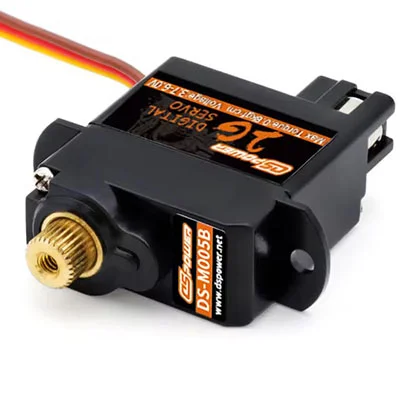
When most people picture a CNC machining center, they imagine a massive cast-iron frame, a spindle spinning at 15,000 RPM, and a control cabinet humming with power electronics. What they rarely think about is the humble micro servo motor—the tiny, pr
- 10-27
- 0
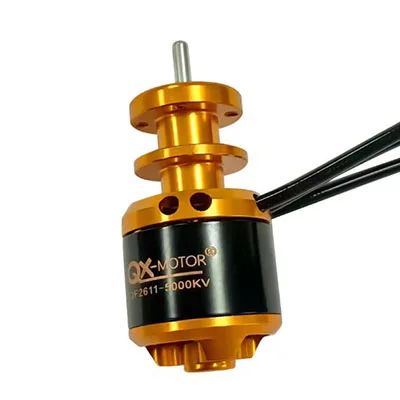
When engineers pick up a micro servo motor for the first time, the reaction is usually the same: surprise at how light it feels. A typical 9-gram servo weighs less than a couple of AA batteries, yet it can swing a control surface, index a small robot
- 10-26
- 18
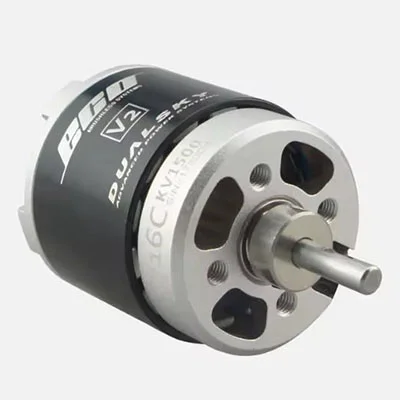
Camera sliders are one of those tools that instantly make video look more professional. A slow, steady lateral move adds depth and production value that a static shot simply cannot match. Commercial motorized sliders, however, can cost hundreds or ev
- 10-26
- 16
Micro servos have quietly transformed the way hobbyists think about weight and balance in RC airplanes. Where builders once stuffed standard-size servos into every available bay and compensated with nose ballast, today's sub-10-gram actuators let you
- 10-26
- 23

RC cars live and die by their batteries. You can bolt on the most expensive brushless motor, tune the suspension to perfection, and drive with surgical precision, but if your charging system is weak or mismatched, the whole experience falls apart. Ch
- 10-25
- 25

Micro servo motors have quietly become one of the most popular actuators in the maker world, and for good reason. They are small, cheap, surprisingly strong for their size, and easy to drive with a single PWM signal. In this project walkthrough, we w
- 10-25
- 32
There is a particular kind of satisfaction that comes from watching a micro servo motor twitch to life for the first time. It is a tiny thing—barely the size of a matchbox, weighing less than a AA battery—yet inside that little blue plastic housing s
- 10-24
- 35
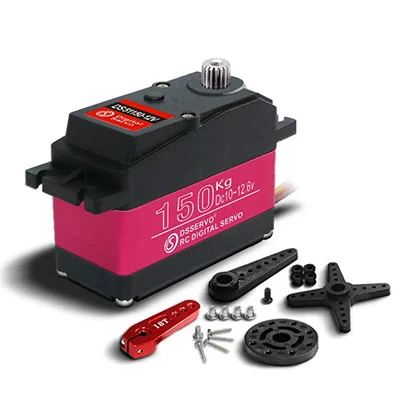
If you've spent any time building robots, RC planes, or automated gadgets, you already know the micro servo motor is the unsung hero of the maker world. These tiny powerhouses—typically weighing under 20 grams—deliver precise angular control at a pri
- 10-24
- 0
Pulse Width Modulation (PWM) is one of those engineering concepts that quietly powers a surprising amount of the world around us. From the dimming of an LED strip to the precise positioning of a robotic arm, PWM serves as the bridge between the digit
- 10-23
- 39
There's a particular kind of magic that happens when a hobbyist RC car stops being just a toy and starts making decisions on its own. Maybe you've seen the videos: a small chassis weaving between obstacles, pausing at a stop sign drawn in chalk, or p
- 10-23
- 53
The Raspberry Pi is a fantastic brain for robotics projects, but it is a terrible power source for motors. This is the single most important lesson every maker learns — usually the hard way, after watching their Pi reboot randomly or, worse, release
- 10-23
- 43

A pet door sounds like one of the simplest gadgets a homeowner could install: cut a hole, add a flap, done. But anyone who has actually lived with one knows the truth. The neighborhood raccoon learns the schedule. The cat drags in a "gift" at 3 a.m.
- 10-23
- 49
There's something deeply satisfying about watching a small pile of plastic brackets, tiny motors, and jumper wires come alive as a working robotic arm. Over the past few weekends, I built one using micro servo motors and an entirely open-source softw
- 10-22
- 54
Motor vibration in RC cars is one of those problems that starts small and snowballs fast. What begins as a faint buzz at half throttle can turn into cracked motor mounts, stripped spur gears, erratic steering, and eventually a cooked ESC. Ask anyone
- 10-22
- 54
Camera gimbals have quietly become one of the most demanding mechanical systems a hobbyist or prosumer will ever touch. A gimbal has to hold a camera steady, cancel out hand shake, and do it smoothly enough that the footage looks like it came off a r
- 10-22
- 50
Micro servo motors are the unsung heroes of the maker movement. Small, cheap, and surprisingly strong for their size, they power everything from animatronic eyeballs to RC airplane control surfaces. But when you chain four or five of them together in
- 10-22
- 59

When you're building or upgrading an RC car, the servo motor is one of those components that quietly determines whether your steering feels razor-sharp or muddy and unresponsive. Micro servo motors have become the go-to choice for 1/16, 1/18, and eve
- 10-21
- 0
Micro servo motors are everywhere. They sit inside RC planes, robotic arms, camera gimbals, 3D-printed walkers, and even the occasional automated cat feeder. From the outside, they look almost insultingly simple: three wires, a plastic case, a horn t
- 10-20
- 70

Older motors rarely fail because of bad magnetics or worn brushes alone. More often, they fail because the heat inside them has nowhere to go. This is especially true for the small, high-speed machines that dominate today's automation landscape — the
- 10-20
- 65
About Us

- Lucas Bennett
- Welcome to my blog!
Hot Blog
- Everything You Need to Know About Micro Servo Motor Size and Weight
- How Micro Servo Motors Are Revolutionizing Industrial Automation
- Designing Multilayer PCBs: Challenges and Solutions
- How to Implement Control Logic in PCB Design
- Specification of Motion Hysteresis in Gear and Feedback Loop
- Weight Implications: Micro Servo vs Standard Servo in Drone Design
- Response Time Measurement of Micro Servo Motors under Robot Load
- How to Maintain and Upgrade Your RC Car's Differential
- Waterproofing Techniques for Micro Servo Motors in RC Boats & Cars
- Analog Micro Servos vs Digital Micro Servos