"servo motor gear materials" Result

If you’ve ever tuned a PID loop on a micro servo-driven gimbal or wrestled with a 3D-printed robotic arm that just won’t stop vibrating, you know the usual suspects: bad potentiometer, weak driver IC, or a control frequency that’s slightly off. But t
- 9-11
- 112

If you’ve ever tuned a PID loop on a tiny 9g micro servo, you know the frustrating dance: the motor hums, the horn twitches, and the position error just won’t settle below ±0.5°. You swap the controller, adjust the deadband, even change the supply vo
- 9-7
- 133

When the signal stops, the gear keeps talking. Here’s why your micro servo’s teeth matter more than its torque rating. You’ve tuned your PID loop to perfection. The micro servo motor on your robotic arm is responding at 2kHz, twitching with surgical
- 8-27
- 186

When you’re pushing a 9g micro servo to its limit, the last thing on your mind is metallurgy. But the gear train—not the firmware, not the potentiometer—is often the real bottleneck when signal quality degrades. Let’s tear down the physics, the alloy
- 8-21
- 159
If you’ve ever tuned a PID loop on a 9g plastic-gear micro servo, you know the feeling. The response curve looks perfect on the bench—zero overshoot, crisp 0.1° settling. Then you deploy it in a real system, add a 20ms wireless latency spike, and sud
- 8-18
- 156
When you pick up a micro servo motor—the kind that fits in the palm of your hand, often found in robot arms, camera gimbals, and RC aircraft—you rarely think about what’s happening inside those tiny white or black plastic gears. Yet, the material tho
- 5-12
- 313
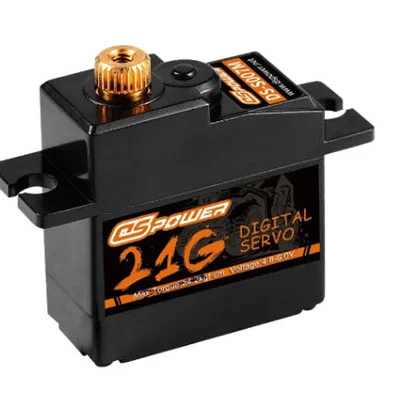
When it comes to precision motion control, few components are as widely misunderstood as the humble gear train inside a micro servo motor. Most hobbyists and engineers obsess over the motor's torque rating, the feedback potentiometer's linearity, or
- 4-24
- 347
About Us

- Lucas Bennett
- Welcome to my blog!
Hot Blog
- Everything You Need to Know About Micro Servo Motor Size and Weight
- How Micro Servo Motors Are Revolutionizing Industrial Automation
- Designing Multilayer PCBs: Challenges and Solutions
- How to Implement Control Logic in PCB Design
- Specification of Motion Hysteresis in Gear and Feedback Loop
- Weight Implications: Micro Servo vs Standard Servo in Drone Design
- Response Time Measurement of Micro Servo Motors under Robot Load
- How to Maintain and Upgrade Your RC Car's Differential
- Waterproofing Techniques for Micro Servo Motors in RC Boats & Cars
- Analog Micro Servos vs Digital Micro Servos
Latest Blog
- Mass (Weight) Effects on Performance and Specification Interpretation
- Building a Servo-Controlled Camera Slider with Arduino
- Weight Distribution and Center of Gravity Effects with Micro Servos in RC Airplanes
- Understanding the Basics of RC Car Charging Systems
- Using a Temperature Sensor to Control Your Micro Servo Robotic Arm
- Building a Servo-Driven Automated Plant Watering System with Raspberry Pi
- Micro Servo Motor Price Comparison: Which Offers the Best Value?
- The Role of PWM in Signal Reconstruction: Applications and Tools
- How to Build a Remote-Controlled Car with Autonomous Driving Capabilities
- How to Power Servo Motors with Raspberry Pi Safely
- Smart Pet Door Controlled by Micro Servo Motors
- Building a Micro Servo Robotic Arm with Open-Source Software
- Diagnosing and Fixing RC Car Motor Vibration Issues
- Micro Servo vs Standard Servo in Camera Gimbals
- Building a Micro Servo Robotic Arm with a Servo Motor Controller
- Best Micro Servo Motors for RC Cars: Price vs. Performance
- A Breakdown of the Control Circuit Inside Micro Servo Motors
- How to Retrofit Older Motors with Modern Thermal Management Solutions
- An Easy Explanation of Micro Servo Feedback Loops
- How to Maintain and Upgrade Your RC Car's Chassis Bracing